
Evoca
Modular Architecture and Hybrid GUI for Maestro Touch

Evoca Group is a vending machine manufacturer. Industry leaders, specialized in beverage and snack distribution.
Evoca wants its machines to be and remain at the cutting edge of technology.
With this in mind, Lenewt has been supporting Evoca in its technological innovation process since 2019.
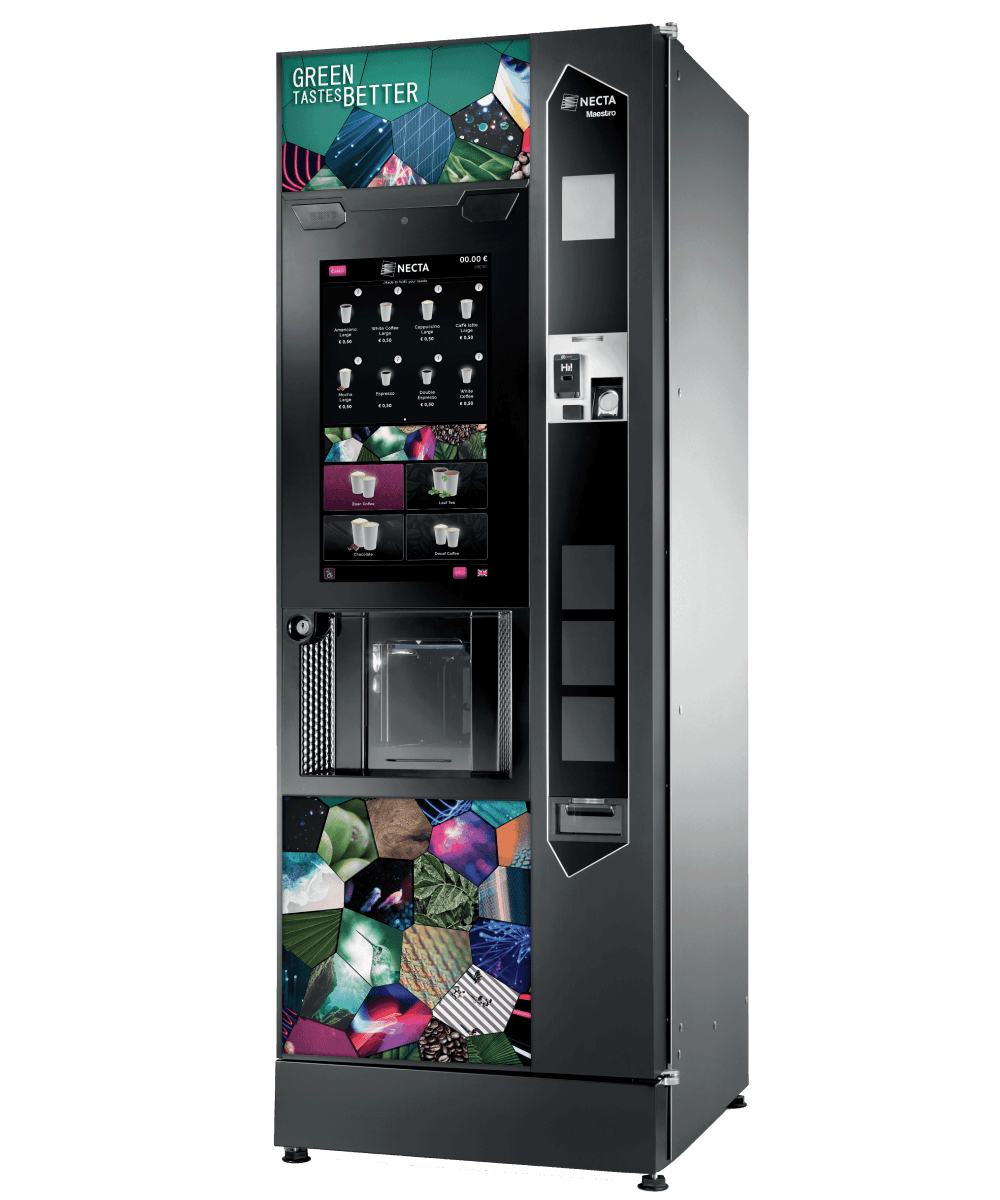
When Lenewt began supporting Evoca, the company had recent machines running on Linux. Their product line kept expanding and enriching with features. Evoca wanted to add a new premium machine to its product line: Maestro Touch.
The goal for this new machine: a modern interface but above all customizable at will. The decision had been made to implement a web interface that would communicate with the native application existing on other machine models. Evoca engaged Lenewt to find how to integrate this web interface and make it coexist with the native application.
The Lenewt Solution
Modular Architecture
The Need
Evoca already had several other connectivity features combined in a module shared between its machines. A complex sharing across multiple branches making maintenance complicated and updates on different models difficult. The communication layer between the native application and web interface had to join this module. It was necessary to address this growing complexity.
The Solution
To address this issue and enable Evoca Group to feel confident about their products' future, Lenewt reworked the connectivity module. Fundamental work was done to decouple it from the application's business core. All links between the module and the rest of the application were severed, and a public interface was implemented. It's through this interface that the connectivity module now communicates with the rest of the application. The result: a single module version to maintain for all Evoca machine models.
Hybrid Graphical Interface
The Need
We worked with Evoca's technical teams to understand more precisely what was expected. The goal was to enable customization of the user experience. It was neither necessary nor desirable to offer customization of technical, maintenance, and configuration interfaces.
The Solution
To enable the web application to communicate with the machine's native application, Lenewt integrated with the existing connectivity module. The module was considerably extended to meet fine-grained control needs and allow the web interface to correctly reflect all machine states.
To keep the native application's technician interface while using the web application's user interface, we modified the native application so it hides during user phases. We modified the Linux system so it brings the right application to the foreground at the right time.
The result is seamless integration for the user who doesn't see the transition between the two HMI technologies.